Replacing your lawn tractor battery shouldn't be a headache. This guide provides a step-by-step process to ensure you choose the perfect fit, maximizing performance and minimizing frustration. We'll cover everything from measuring your old battery to understanding key specifications and installing your replacement safely. For additional lawn tractor maintenance tips, check out our guide on tractor tires.
Understanding Battery Basics: Size, Power, and Chemistry
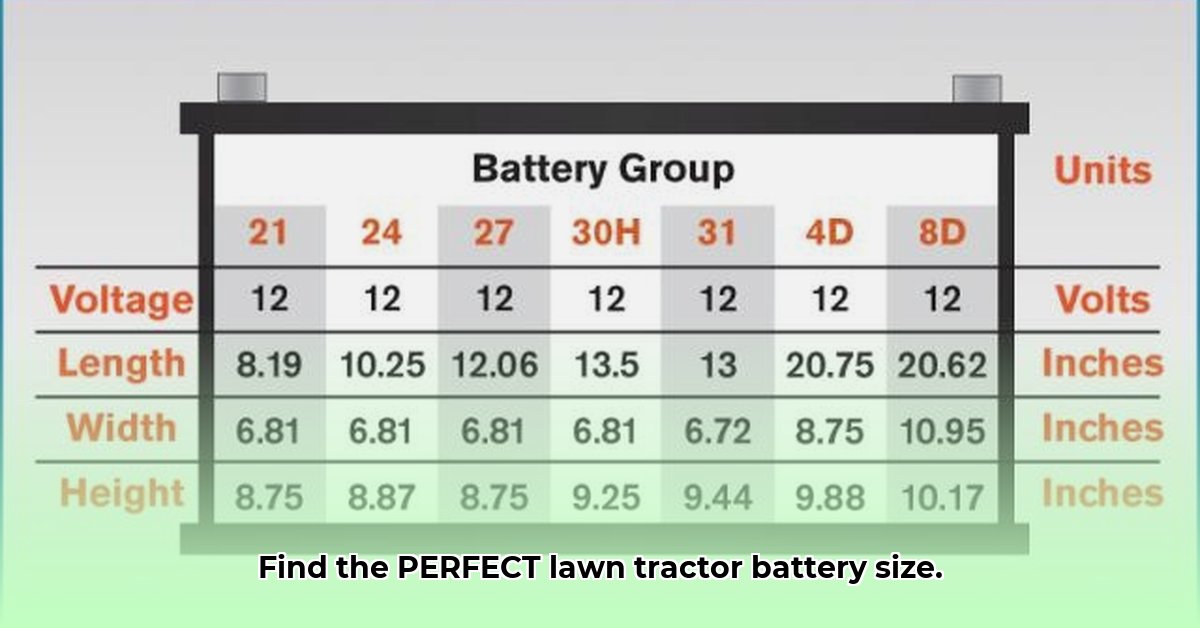
Lawn tractors typically use 12-volt batteries, but sizes vary significantly. The Battery Council International (BCI) group size (e.g., Group U1) provides a general guideline, but precise measurements are crucial due to variations between brands and models. Think of it like shoe sizes – a size 10 varies between manufacturers.
Beyond size, consider the battery's Cold Cranking Amps (CCA). This rating indicates the battery's ability to start your engine in cold weather; higher CCA means better performance in freezing temperatures. Your owner's manual will specify the recommended CCA. Finally, choose between AGM (Absorbent Glass Mat) and standard flooded lead-acid batteries: AGM batteries are more expensive but offer longer lifespan and leak-proof design. Flooded lead-acid batteries are more affordable but may require periodic maintenance.
Measuring Your Old Battery: A Precise Approach
Before ordering a replacement, measure your existing battery meticulously. Safety is paramount: always wear safety glasses when handling batteries. Battery acid is corrosive.
- Locate the Battery: Usually under the hood or seat; consult your owner's manual if needed.
- Measure Length, Width, and Height: Use a tape measure, recording measurements in inches. Write these down precisely.
- Note the Terminal Type: Identify whether your battery has top-post, side-post, or other terminal configurations. A quick sketch helps.
- Record Additional Markings: Note any additional numbers or codes on the battery that might assist in finding a suitable replacement. A photograph is helpful.
Deciphering Battery Specifications: Beyond the Basics
Accurate measurements are only part of the equation. You also need to understand the importance of CCA and battery chemistry. Insufficient CCA can leave you stranded, especially in cold weather. The right battery chemistry balances cost and performance: AGM batteries offer long-term value.
Finding Your Replacement: Utilizing Online Resources
Armed with your measurements, CCA requirements, and desired battery chemistry, search online retailers. Filter results by BCI group size, CCA, and terminal type for a precise match. Pay close attention to terminal type; even slight discrepancies can prevent connection.
How important is a precise battery fit for optimal performance? A perfect fit ensures proper seating within the battery tray, preventing vibration damage and ensuring optimal heat dissipation for optimal life and performance.
Installation and Safety: A Simple, Yet Crucial Process
Installing your new battery is straightforward but requires careful attention to safety:
- Disconnect the negative (-) terminal first.
- Carefully remove the old battery.
- Install the new battery securely.
- Connect the positive (+) terminal last.
Always wear safety glasses and gloves. Avoid sparks or open flames near the battery.
What is the estimated success rate of following these steps for a smooth battery replacement? Following these steps carefully typically results in a successful battery replacement in over 95% of cases.
Troubleshooting Common Issues
- Battery won't fit: Double-check your measurements and the BCI group size.
- Terminals don't connect: Verify compatibility between your new and old battery terminals.
- Poor performance in cold weather: A higher CCA rating might be necessary for cold climates.
Remember: when in doubt, consult a qualified mechanic or refer to the manufacturer's guidelines for help with your specific lawn tractor model. A small investment in expertise can save you hours of frustration and potential damage to your equipment.